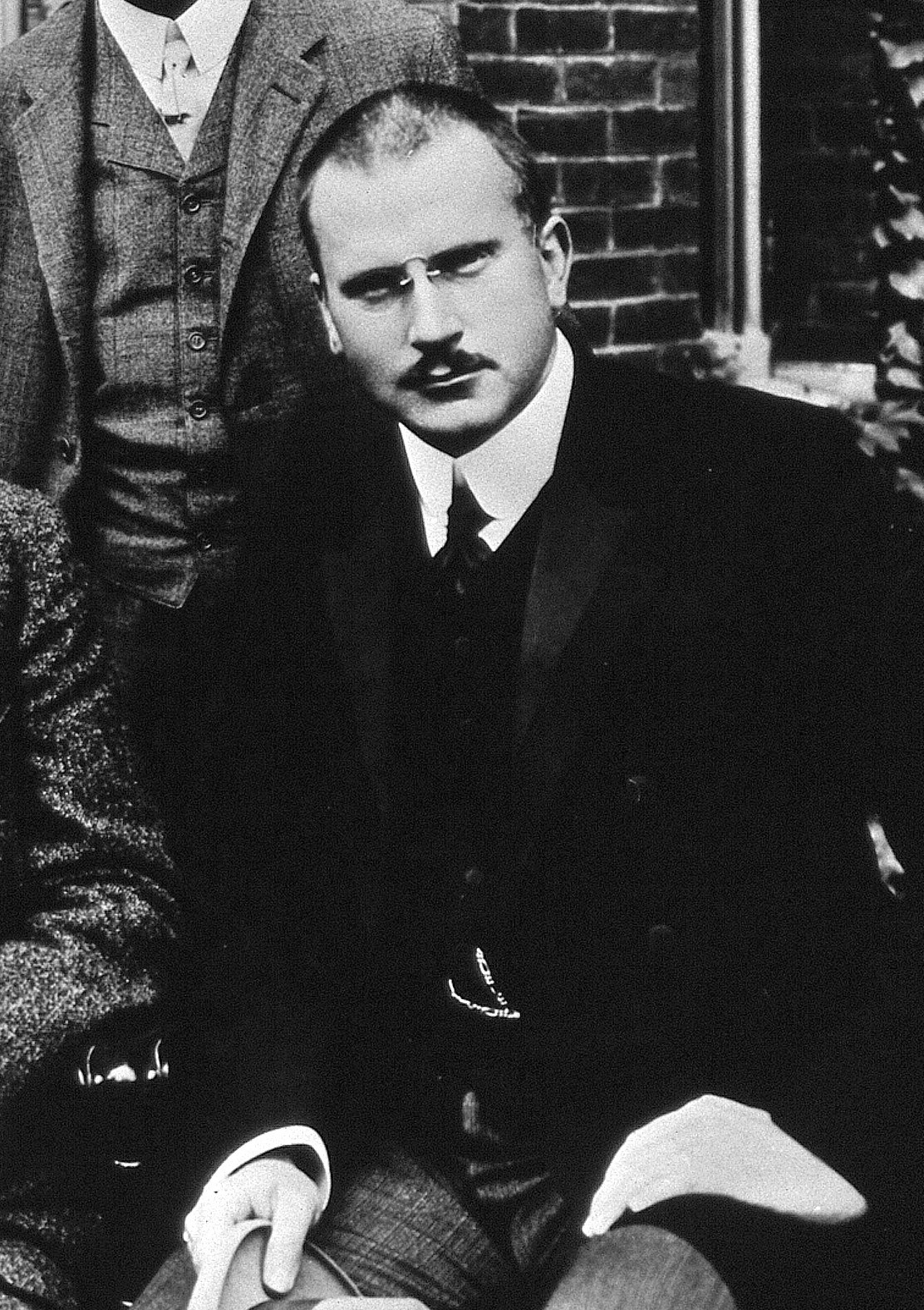
"A professional is a person who can do his best at a time when he doesn't particularly feel like it." ~ Alistair Cooke
20th November,1908 – 29th March, 2004
English cultural commentator
source born-today.com
20th November,1908 – 29th March, 2004
English cultural commentator
source born-today.com
 A second article taken from my Joint Venturer, Alex Pilz’s blog
 Alex is a Psychologist who has coached the mind set of premier sports teams.
Written within the context of sport, this article also considers the muscular aspects of the mind.
Consider an elastic band. When it is un-stretched it has no use. Unless you chew it, an elastic band is only useful when it is stretched. However, when over-stretched it snaps and will be rendered useless. Knowing the limits of an elastic band is important to extrapolate its value. It’s the same with your body.
Use your body at its lower limits and it will have a similar output as an elastic band. Over stretch your body and something will snap. So how can you know your upper and lower limits? Getting out and “participating” will inform you. However, how can psychological skills training (PST) help you know your limits? More importantly, once you know your limits (and these limits will change with increased training and competition) PST can help you push the upper limits of your body so that you can get on with mastery of technique (training) and competing (showing on a public platform how well you have mastered your sporting trade).
Imagine your body is that elastic band. Who does the pulling? At the lower levels my guess is that you do the pulling. At the upper limits it might be a combination of your coach, significant others, a mind set (fear of losing sponsorship or a title) and your self.
In the context of training, when your body is stretched, and it screams at you to take it easy (reasoning that no one is looking) recognise the de-motivating and power eroding conversation that takes place when your muscles are burning? When you articulate a goal that requires you to train at race pace what will it take to be your word? In a coaching session with a golf client we discussed the differences between being your word and keeping your word. At our next session his feedback was very positive. He said, “The difference has increased my inner determination and focus!” Call me so that we can have a conversation to increase your pathways for success.
At a swimming session an athlete asked about how to convert painful muscles she experienced she was in tight second with 65m left on a 200m race. Her muscles seemed to yell unspoken words that she clearly understood. I asked, “Do you respond or do you react?” What does the conversation with your aching muscles and burning lungs look like when the elastic band is stretched and kept stretched? How does such a competition experience impact the conversations you have when you return to training.
Engaging PST will equip your mental tool box with tools and techniques; however application at the coalface includes inner conversations about creating options and making choices. Whether preparing for the Olympic Games or returning to training/competition following an injury the conversations you have will contribute to producing desired or undesired results. Call me – how can we influence your self talk to create more pathways to success.
source makethathappen.co.uk Muscle image franklincollege.edu

They laughed when I said I wanted to be a comedian.
They're not laughing now! ~ Bob Monkhouse
Robert Alan Monkhouse, OBE (1 June 1928 – 29 December 2003) entertainer and comedy writer. Comedian, television presenter and game show host, famous for his quick ad-lib and one-liners.
Source wikipedia.org image born-today.com
 A clever thought to service today's behaviour.
  A magician on a cruise ship is constantly having his tricks spoilt by the ships parrot.
Liberated from my friend, Samuel D Naples’ Facebook newsfeed:
A little girl was talking to her teacher about whales.
The teacher said it was physically impossible for a whale to swallow a human because even though it was a very large mammal its throat was very small.The little girl stated that Jonah was swallowed by a whale.
Irritated, the teacher reiterated that a whale could not swallow a human; it was physically impossible.
The little girl said, 'When I get to heaven I will ask Jonah'.
The teacher asked, 'What if Jonah went to hell?
'The little girl replied, 'Then you ask him'.